
India Inc's cash pile was up 13.8 per cent last fiscal year, thanks to a combination of higher profits in sectors such as IT and fund raising by top companies such a Reliance Industries, Bharti Airtel and Tata Motors, among others.

The recent report in the New York Times that China had brought India's financial capital - Mumbai - to a halt by hacking the electricity supply grid has not come as a surprise to the CTOs (chief technology officers) and cyber security experts. Indian companies, including critical infrastructure providers such as power grids, ports and radar systems, lack the IT infrastructure to prevent hacking from hostile state actors like China and North Korea, warn security experts. Recently, the United States government warned of yet another breach of critical systems tied to Microsoft Exchange email systems that the company has blamed on China. The breach has impacted thousands of organisations in the US and its impact on India is still unknown.
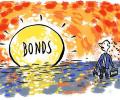
Indian corporate are fast tapping the international bonds market to raise funds for their operational expenses even as they reduce their presence in the rupee bond market. As bonds are costlier for companies and investors are more sceptical than the banks, chief financial officers say they are looking at other avenues for raising funds in the coming months as dollar bond rates are lower in the range of 100 to 250 basis points. "For corporate with reasonable credit quality, the Indian bond market has become less of an option from a cost point of view. "In addition, conditions imposed in the Indian bond market by investors post Franklin episode have also become very onerous," said Prabal Banerjee, president-finance of Bajaj group. "Hence very few corporate are looking at the local bond market for resource mobilisation, since both, bank loans and the overseas bond markets are much more attractive," he said.

'The hackers' objectives were centred around smearing India's reputation, causing productivity loss, creating operational damage and seeking financial gains.'
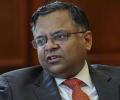
Tata group companies have outperformed the broader market over the past four years, under the chairmanship of N Chandrasekaran. However, the group's fortunes rely heavily on the performance of Tata Consultancy Services (TCS) now, as compared to the past. The combined market capitalisation of the group's listed companies has nearly doubled in the last four years, against a 77 per cent rally in the benchmark Sensex during the period. The overall market value of 16 key group firms - excluding listed subsidiaries of such entities - stood at Rs 16.8 trillion as of Friday. This was close to 2x the Rs 8.45 trillion as of February 21, 2017 - the day Chandrasekaran took charge as chairman of Tata Sons.

'We are working in association with the state government and other transmission companies to make sure that the city never experiences blackouts'

India Inc's quarterly net profit reached a record high of Rs 1.64 trillion in the third quarter ended December 31, 2020, mainly due to gains from higher commodity prices and a big swing in banks' earnings. The combined net profit of 3,323 listed companies that have declared results so far was up 68.6 per cent year-on-year (YoY). In comparison, earnings were up six times (534 per cent) in the second quarter and 6.5 per cent in the corresponding period last year.
The pandemic caused construction delays at its ongoing projects due to several factors such as lockdowns enforced by government agencies, work-stoppage orders, disruptions in the supply of materials and shortage of labour resulted in failure to meet development milestones.
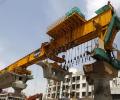
The combined net sales of 42 listed construction and capital goods companies that have declared their third-quarter results so far were down 2.3 per cent year-on-year in Q3FY21 while core operating profit was up just 4.9 per cent YoY during the quarter.

CEOs expect to finish the ongoing March quarter with positive growth as the corporates get back to work in full strength.

The palace, currently run by JLR, will be offered to bidders on a long-term management contract.

Market cap of government companies has remained unchanged in the past 8 years.


When the third round of bids was opened, Oaktree's offer was the highest, but with several riders. While Piramal offered higher upfront cash and offered to merge its financial business with DHFL, Adani was ranked third in the race, reports Dev Chatterjee.

BSE-listed companies' market capitalisation reached Rs 197.7 trillion on January 21, against India's nominal GDP of Rs 190 trillion during 12 months ended December 2020.

Most of the hirings are, however, in the entry or junior level.

While asking firms not to worry about sharp volatility in prices, Birla said companies must make sure they do not get caught in 'comorbidities'.

Besides low interest rates, a reduction in active Covid cases and strong high-frequency macro data have lifted the sentiment of both corporate India and the stock markets.

Over the three-month period, Airtel's stock price has rallied from Rs 432 to Rs 540, while Vodafone Idea has risen from Rs 9.2 to Rs 11.8 per share.

This is first time in 25 years that a benchmark equity index in India is trading at a P/E multiple of 40x or higher.
 © 2026 Rediff.com - Investor Information - Advertise with us - Disclaimer - Privacy Policy - Sitemap - Feedback - About us - Terms of use - Grievances